 Skip to content

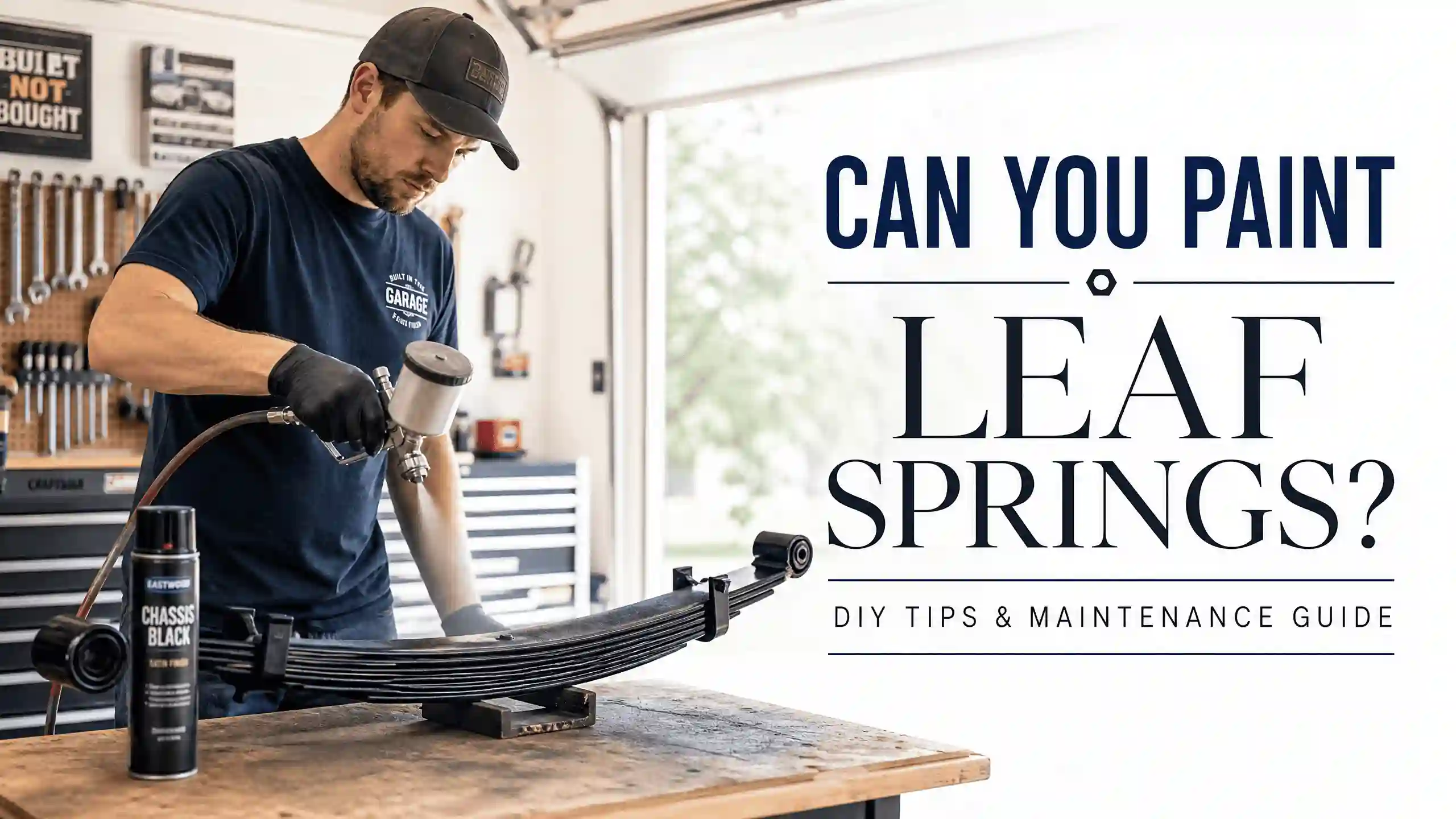
At first glance, a leaf spring is just a few stacked steel plates — so spraying a coat of paint on it seems like an easy way to make it look better and fight off rust. But before you grab a spray can, there’s a bit more worth understanding.
Quick Answer
Yes, you can paint leaf springs yourself — but technique matters.
Leaf springs are a core component of your suspension system. They need to flex and rebound repeatedly while you drive, and if the paint job isn’t done right, it can shorten the part’s service life.
Factory Anti-Corrosion Treatment
Properly manufactured leaf springs go through professional anti-corrosion treatment before leaving the factory. This typically involves two stages: e-coating and assembly topcoat spraying.
E-Coating
This is currently the most advanced anti-corrosion method used in the industry.
A brand-new, untreated leaf spring is submerged entirely in a coating bath. When an electric current is applied, coating particles are attracted to the metal surface — similar to how a magnet picks up iron filings.
After this process, the coating achieves:
– 360-degree coverage with no dead spots — including gaps between leaves, inner walls of bolt holes, everything gets coated.
– Extremely uniform thickness — the film thickness is nearly identical at every point, which looks good and performs well.
– Superior adhesion — it’s not just a surface layer sitting on top; it bonds to the metal and is very hard to peel off.
For truck leaf springs and trailer leaf springs, the e-coat layer usually serves as the first line of defense against corrosion..
Assembly Topcoat
Once the entire leaf spring assembly is put together, a topcoat is sprayed over the whole unit. This topcoat mainly improves visual consistency and adds an extra layer of rust protection.
Think of it this way: e-coating is your “base anti-corrosion layer,” while the assembly topcoat is more about “outer protection and appearance.”
One thing to keep in mind — over-spraying can affect the clearance between leaves. Before deciding to repaint, check whether the existing coating is still in good condition. Minor surface oxidation can often be handled with a simple cleaning rather than a full repaint..
When It Makes Sense to Paint
Our engineers identified three common scenarios:
- Rust prevention — especially for boat trailer leaf springs. These are constantly exposed to rain and salt, making them prone to rust. A fresh coat of paint can help reinforce the protection.
- Restoring an older vehicle — during a full vehicle restoration, painting the suspension gives the underbody a cleaner, more polished look.
- Custom modification — some off-road enthusiasts paint their suspension a different color to match the overall style of their build.
If done properly, painting can genuinely address these needs.
The risks
More paint isn’t always better — especially when it comes to suspension components.
Leaf springs are made up of multiple spring leaves stacked together. If the paint is applied too thickly, the leaves can stick to each other, causing abnormal friction and accelerating wear. An overly thick coating can also hide cracks and early fatigue marks — something you definitely want to be able to spot on a potentially cracked leaf spring before it fails.
You also can’t ignore environmental factors. Think about your operating conditions — temperature, humidity, and exposure — and choose a coating that suits your specific situation.
Painting Steps
Step 1: Preparation
Pick a rust-inhibiting primer designed for automotive chassis use — not regular household paint. Ideally, remove the leaf spring from the vehicle before starting.
Step 2: Thorough cleaning
Start by rinsing with water to wash away mud and sand. Then use a wire brush or sandblasting to remove rust and oil residue. If possible, apply a rust remover spray and let it dry completely — either air dry or use compressed air.
Step 3: Thin coating
If you want to do it properly, brush on a rust converter primer first. Don’t try to lay down one thick coat. Multiple thin layers work much better — wait about ten minutes between each pass.
Step 4:Curing and Reinstallation
Avoid building up thick paint on the contact surfaces between leaves. And don’t rush to put everything back on the vehicle. Paint film needs time to fully cure — check the instructions on your coating product and plan accordingly. If you reinstall and hit the road immediately, road vibrations and impacts can damage the fresh paint before it’s properly hardened.
Final Thoughts
Leaf spring suspension flexes and rebounds constantly while driving. Paint is just a protective layer — it shouldn’t affect the structure itself. Before doing anything, assess the condition of your springs first, then decide whether a repaint is sufficient or if replacement is the safer call.
Done right, painting can improve rust resistance and appearance. But you still need to clean and maintain your suspension regularly over time. Safety always matters more than looks — a fresh coat of paint is never a substitute for sound mechanical condition.
If you have any purchasing needs, feel free to reach out to Everlasting anytime.