 Skip to content

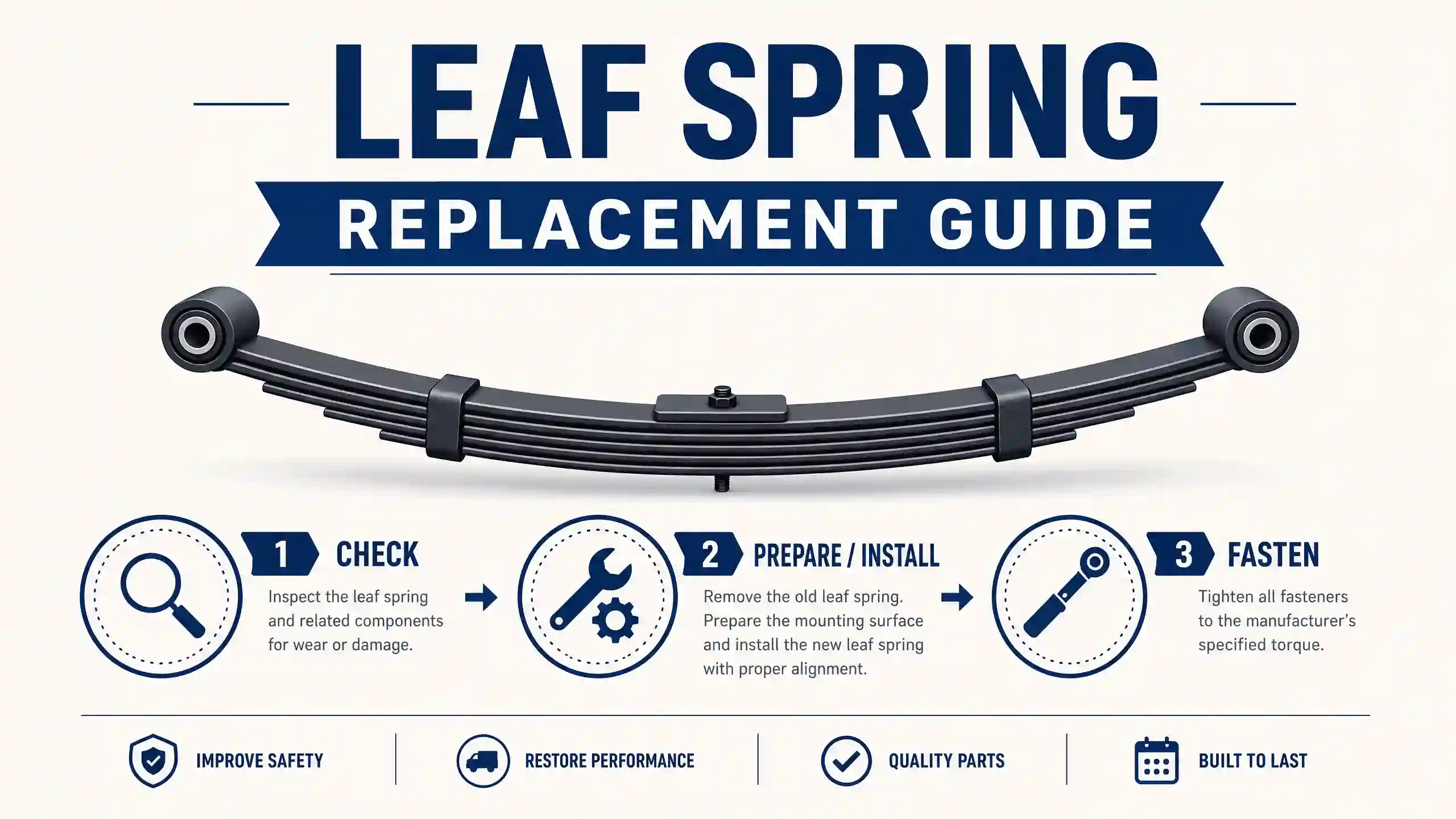
The leaf spring suspension determines the load-bearing capacity and stability of a vehicle’s rear axle. With prolonged use or heavy loads, the leaf springs inevitably become fatigued.
check
Before proceeding, confirm whether the issue is caused by the spring.
Common signs of poor leaf springs include:
The appearance of cracks or fractures, or any cracking of a blade, constitutes a structural issue.
The vehicle body has become significantly lower in profile, noticeably shorter than before when unloaded—a sign that the leaf spring steel’s elasticity has diminished.
Metal friction noise, along with abnormal sounds during cornering or road bumps, is often associated with leaf spring bushings or shackles.
The wheel axle position is off-center, likely due to a broken leaf spring center pin or faulty U-bolts.
A temporary leaf spring repair may suffice for emergency situations, but replacing it with a new one is more reliable if structural fatigue has already occurred.
prepare
Prepare before the official demolition:
Leaf spring assembly
Leaf spring U-bolts
Leaf spring bushings
Jacks and safety brackets
Permeation lubricant
Torque spanner
Please note that u-bolts should not be reused in principle; if removed and reinstalled, the clamping force may fail to reach its original level. The bushings should also be replaced to prevent rubber aging from compromising overall service life.
excrete
Secure the vehicle frame properly and ensure the vehicle is parked on a firm, level surface.
Tires: Lift the frame (not the axle) to allow the suspension to hang naturally, then secure the safety bracket before removing the tires.
U-bolts: Apply lubricant to the upper side, wait for the specified duration as instructed, then evenly loosen the nuts and remove the pressure plate to separate the axle from the spring.
Connection points: First remove the rear leaf spring shackle, then detach the front fixing bolt. The bolt may be tight; exercise patience and avoid abrupt forceful tapping. Once both ends are loosened, use both hands to pull out the entire spring assembly.
dress
The installation sequence is essentially the reverse.
First, install the brand-new leaf spring in its proper position.
Insert the front bolt but do not lock it; similarly, keep the rear connection shackle loose.
Ensure the center pin is properly aligned with the axle hole before installing the new leaf spring u-bolts, and tighten them evenly in a diagonal pattern.
fastening
The final tightening must be performed after the vehicle has come to rest.
Reinstall the tires, remove the brackets, and allow the vehicle to land naturally.
After the suspension system returns to its normal unloading force state, tighten the components using a torque wrench according to specifications to ensure the leaf spring suspension operates at the correct angle.
check
Is the left and right height consistent?
Is the arc symmetric?
Is there any unusual noise?
Replacing leaf spring components is not complicated, but the sequence and details are crucial.
If you have any questions, please feel free to contact our technical consultants at any time. We can provide professional solutions for leaf springs of any vehicle model you require.